YUKON PEOPLE HAVE A PROBLEM WITH GOVERNMENT AT ALL LEVELS WE WILL EXPOSE IT
YUKON LAWS ARE NOT WHAT YOU THINK
3/26/20265 min read
Yukon judge finds outfitter not guilty of wasting meat — because he ate it
This case is so interesting to me, for 50 + years the law is one of my greatest passions. This is not legal advice or claiming to be a lawyer it's an opinion.
Please note some of the pics below may not work or expand on a cell phone. This article was made for a computer.
So here is the back story.
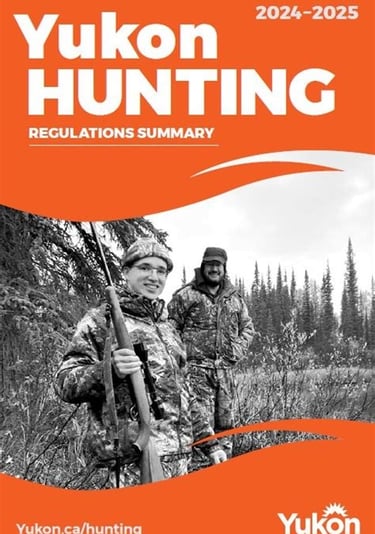
A Yukon judge has found an outfitter not guilty of wasting big game meat, because he ate a portion of the meat. Aaron Florian, a hunting guide and the owner of Yukon Stone Outfitters, was charged with wasting big game meat in 2022 under the Wildlife Act. Judge Kathleen Caldwell issued her decision in Yukon territorial court in Whitehorse on July 21.Conservation officers seized more than 500 pounds of moose meat from Florian's refrigerated trailer in October 2022, after a guided hunt along the South Canol.
Conservation officers said the meat inside the trailer was slimy and smelled sour. Expert testimony from a veterinarian also said the meat was spoiled.
Aaron Florian, a hunting guide and the owner of Yukon Stone Outfitters, was charged with wasting big game meat in 2022 under the Wildlife Act. Judge Kathleen Caldwell issued her decision in Yukon territorial court in Whitehorse on July 21.
Conservation officers seized more than 500 pounds of moose meat from Florian's refrigerated trailer in October 2022, after a guided hunt along the South Canol. Conservation officers said the meat inside the trailer was slimy and smelled sour. Expert testimony from a veterinarian also said the meat was spoiled. Let's not even get in that a veterinarian is not an expert meat inspector. The crown was definitely reaching.
Key legal points to consider
Authority of the enforcement officer
Enforcement powers derive from the enacted statute and any regulations and orders lawfully made under it, not from departmental brochures or unofficial consolidated texts. A conservation officer’s authority depends on whether the relevant provisions cited in charging documents are properly enacted law or validly made subordinate legislation.
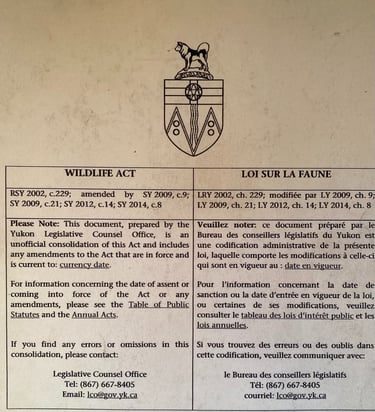
“Unofficial” versions vs. enacted text
Governments often publish consolidated or annotated “unofficial” versions of statutes for convenience; those are not themselves law, but courts generally treat the enacted statute and properly made regulations as controlling. If charges quote an unofficial version that materially differs from the enacted text, that could be used to challenge the charge or its wording.
Proper citation and procedural fairness
Criminal and regulatory charges must correctly identify the statutory provision and the elements of the offence. Mis-citation or reliance on an incorrect text can lead to dismissals, acquittals, or at least successful procedural challenges (e.g., particulars, notice, or vagueness arguments).
Interpretation, definitions, and gaps (e.g., “meat spoilage”)
If an element of the offence (like “meat spoilage”) is not defined in the statute or established by binding precedent, courts may interpret the term using principles of statutory construction, legislative purpose, and common law. A judge’s remark that there is “surprisingly little legal precedent” is not dispositive; it simply signals that the issue may be novel and could require appellate guidance.
Collateral remedies and civil claims
Alleging that the government knowingly enforced an invalid text could support administrative or civil remedies in some circumstances (e.g., for unlawful deprivation of liberty or costs incurred), but these are fact-specific and typically require proof of bad faith, negligence, or procedural unfairness. A class action would require common legal or factual issues and meet certification thresholds — not guaranteed.
Practical enforcement realities
Even if there is a legal defect, enforcement agencies and prosecutors can sometimes rectify errors (e.g., by recharging under the correct provision or relying on the enacted statute). Legal proceedings can be costly and uncertain. An other point to consider is if there has been a judgment such as conviction or acquittal, and a correction of the charges is made, this should be considered Double Jeopardy.
The whole of the Yukon Territory legal, bureaucratic and political, seem to be operating under colour of law. This is the semblance of apparent authority of law but is actually in contravention of law, because the operation of certain laws do not exists.
3.Recommended next steps (practical and legal)
Obtain the precise charging documents, the exact statutory citations used, and copies of the “unofficial” and the enacted versions of the Yukon Wildlife Act and any relevant regulations/orders cited.
Have a lawyer (criminal/regulatory defence or administrative law lawyer experienced in territorial law) review the materials to determine:
Whether the charged provision is validly enacted or was misapplied;
Whether mis-citation or reliance on an “unofficial” text gives rise to a defence, procedural remedy, or basis to seek dismissal;
Whether an evidentiary issue (e.g., undefined “meat spoilage”) gives rise to reasonable doubt or a legal challenge to the charge.
If multiple affected hunters exist and a common legal issue is identified, consider coordinated representation or exploring a collective action, after discussing costs and likelihood of success with counsel.
If there is systemic mispublication or failure to update legislation, consider asking counsel about administrative remedies, judicial review, or a public interest complaint to prompt legislative or enforcement clarification.
Tone and policy considerations
Courts prefer resolving statutory ambiguities on their merits; a judge’s caution about lack of precedent does not equal a finding the law is invalid. Public policy, consultation obligations with Indigenous groups, and legislative history can affect interpretation and reform timetables.
Summary conclusion
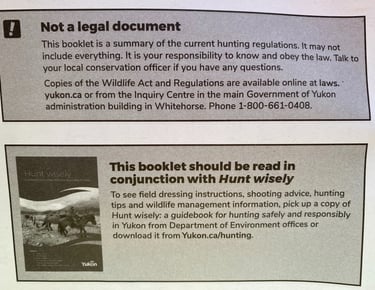
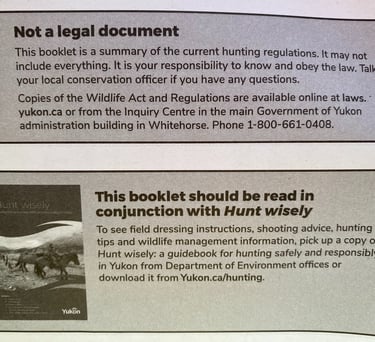
If the documents relied on by enforcement are indeed labeled “unofficial” or “not a legal document,” that raises a potentially serious procedural and legal problem for prosecutions brought under them — but whether it creates a viable defense or a basis for civil action depends on the specific statutory framework, how the documents are used, and case law.
The purpose of this article is for your information and a warning to our governments that it's not just the wildlife act. Here a small list of affected acts.
Highways Act
Lands Act
Environmental Act
Land titles Act
etc.....
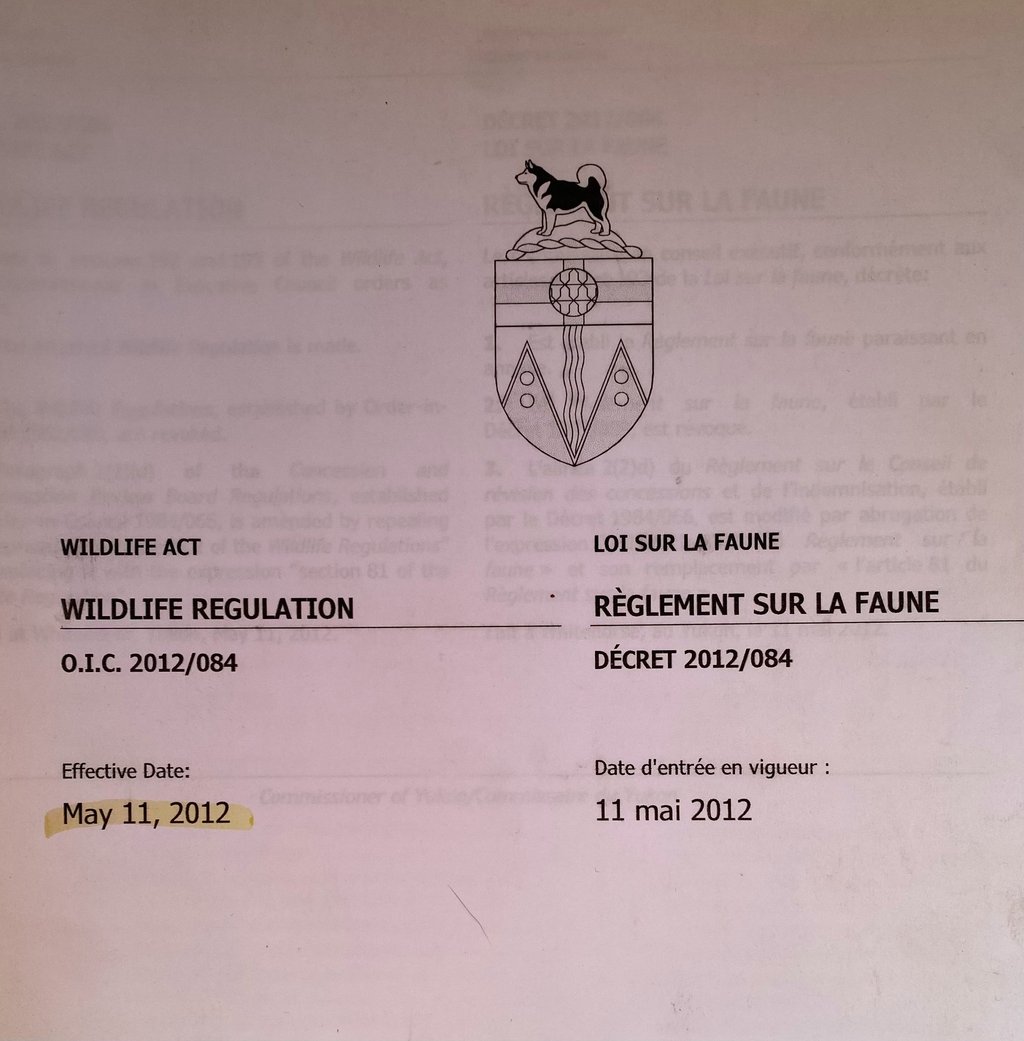
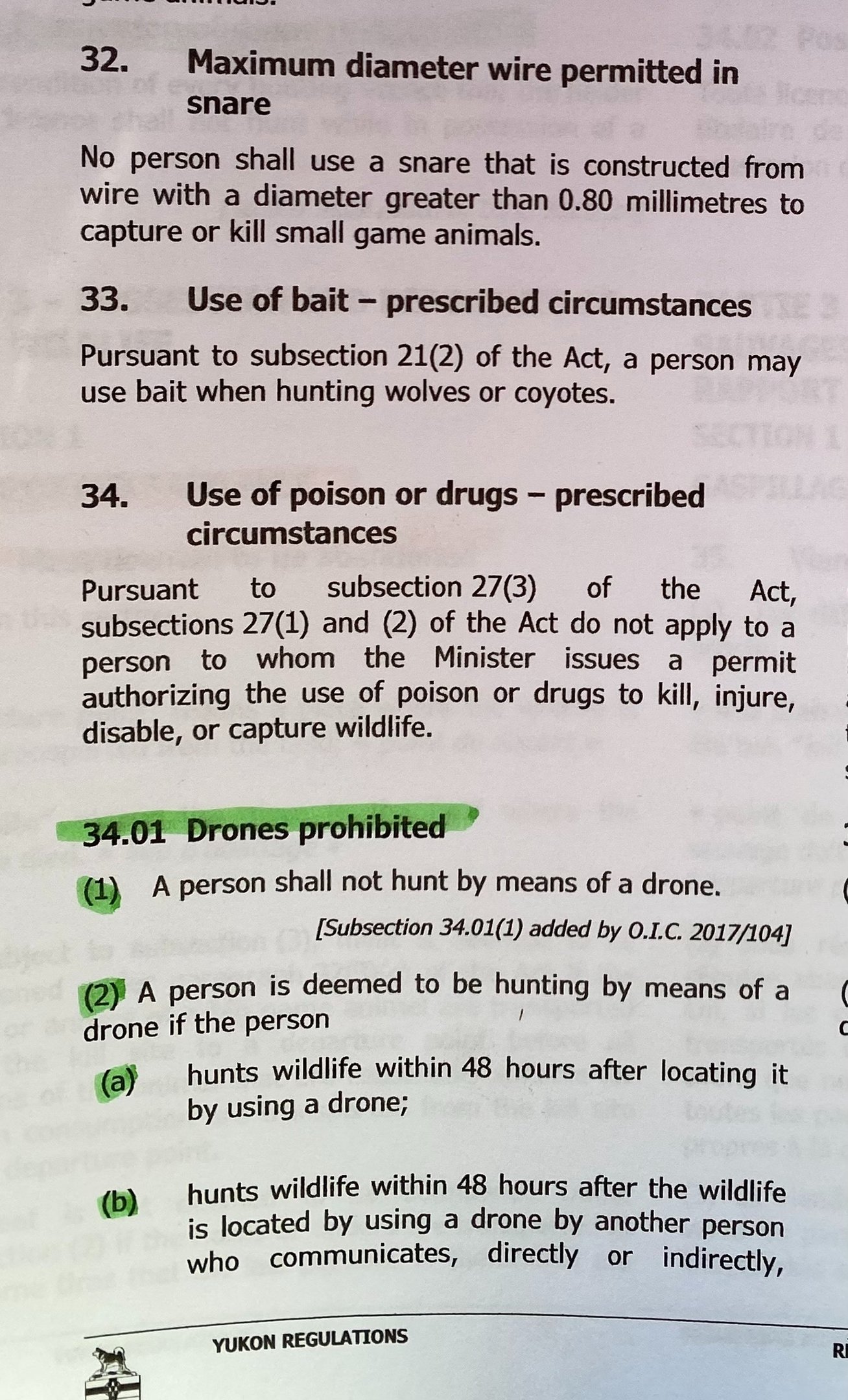
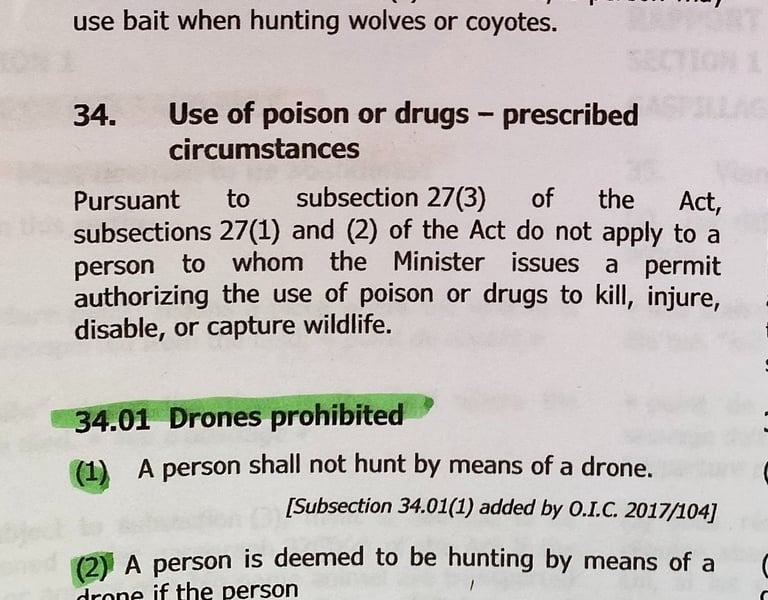
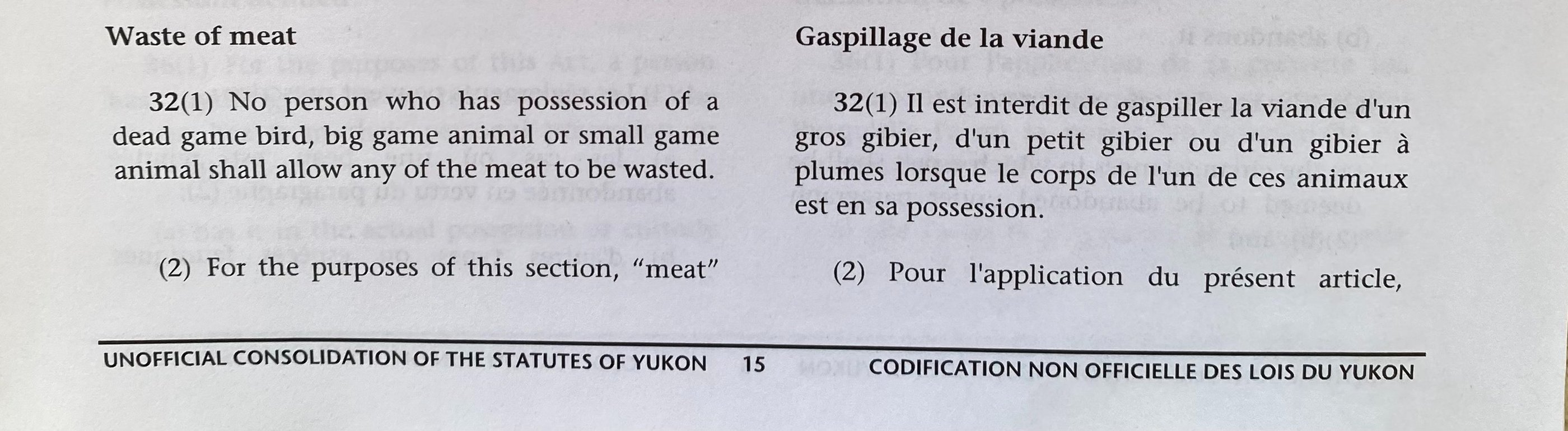
Please see below an example of the Two deferent Yukon Territory Wildlife Acts.
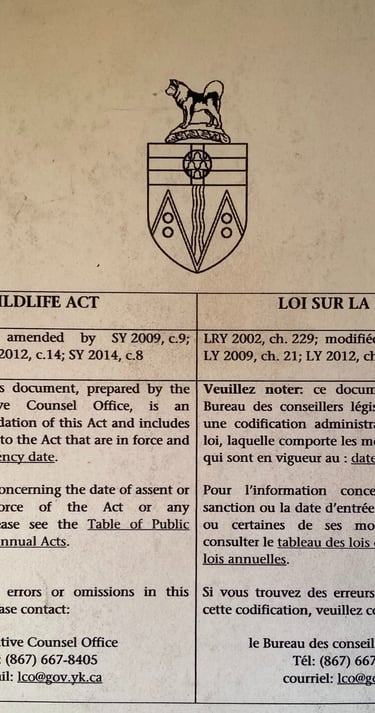
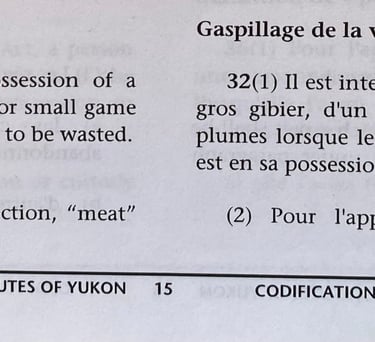
Top is unofficial section 32 "waste of Meat"
On the bottom official section 32 " Maximum wire diameter permitted in snares"
There are more, but you know what to look for now it has been pointed out. If any body in the legal field thinks I'm wrong please fell free to explain or debate like we say your in the business of arguing .
Again I'm not a lawyer or giving legal advise it's my opinion and my interpretation of the information given to the public by the government of Yukon, This article is for information purposes, seek a lawyer for legal advise on your specific case.
Article by
Norm Boisvert
Unofficial WILDLIFE ACT SEC.32
WILDLIFE ACT SEC.32